
NADCAP ACCREDITED · MISSISSAUGA, ONTARIO
Shot Peening Services Ontario
QUICK ANSWER · WHAT IS SHOT PEENING?
Shot peening is a cold working process in which controlled-size, edge-free shot media (cast steel shot, conditioned cut wire, ceramic, or glass beads) is propelled at high velocity onto a metal surface. The compressive stress layer counteracts tensile stresses that initiate fatigue cracks, extending component life.
30+
years NADCAP
100μm
compressive layer depth
2432
AMS spec
THE RIGHT CHOICE
Industry's Leading Mechanical Surface Treatment
Vibra Finish is a NADCAP-accredited facility with more than 30 years of experience processing fatigue-critical components for aerospace OEMs, Tier 1 automotive suppliers, and defense contractors.
01
Increased Fatigue Life
Compressive residual stresses at the surface counteract tensile stresses that promote fatigue crack initiation, on shafts, gears, springs, and compressor blades.
02
Improved Hardness & Yield Strength
The cold working effect raises yield stress and surface hardness without compromising core material properties.
03
Cost-Effective Surface Treatment
No chemical consumables, no liquid waste. Components designed with peening can be made lighter without sacrificing durability.
04
Material & Geometry Compatibility
Aluminum alloys (2xxx, 6xxx, 7xxx), titanium, carbon and alloy steels, stainless steel, Inconel, and Waspaloy.
THE PROCESS
The Shot Peening Process at Vibra Finish
Nothing enters production without a reviewed technical plan and a passed first article. Every batch is fully traceable from receipt to shipment.
STEP 01
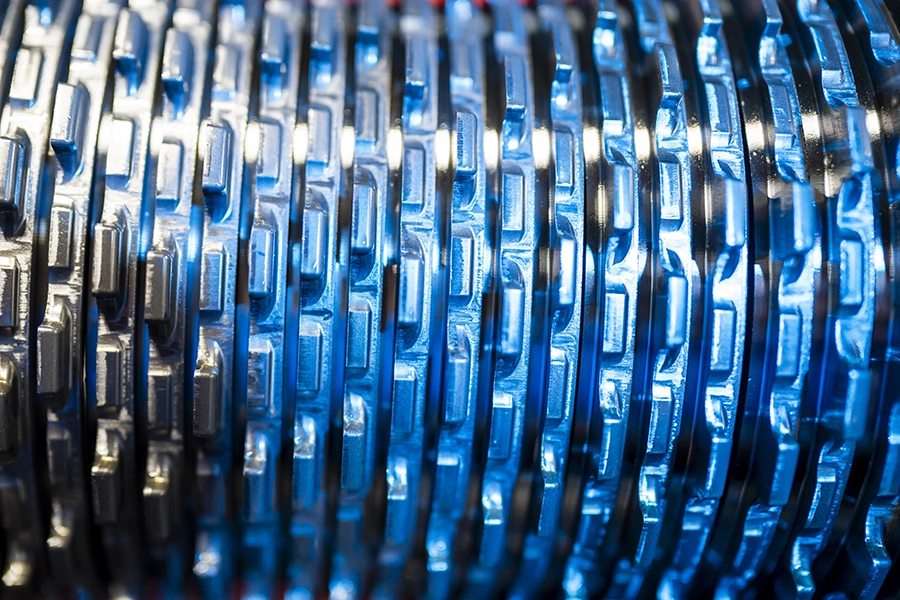
Customer Specification Review
Process begins with the customer’s engineering drawing and applicable AMS specification. Vibra’s process engineers develop the process from the specification requirements, not independently.
STEP 02
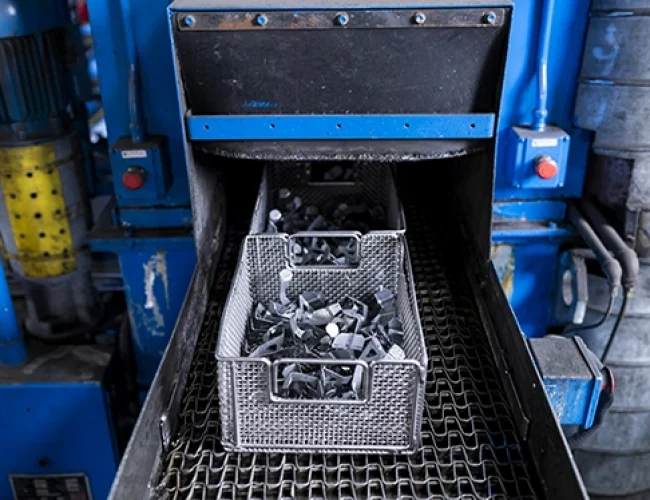
Process Development to Applicable Standards
Vibra develops a formal technical process plan documenting the complete parameter set: Almen intensity range, coverage requirements, media type and size, equipment selection, and masking requirements.
STEP 03
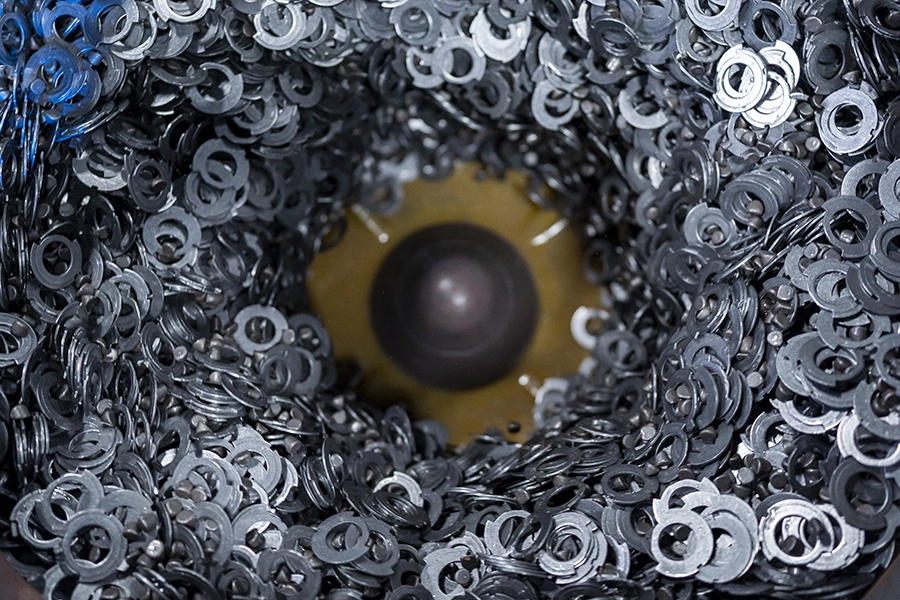
Technical Plan Submission & Customer Approval
The technical process plan is submitted to the customer for review and formal approval before any production activity begins. No parts are processed until the customer has approved.
STEP 04
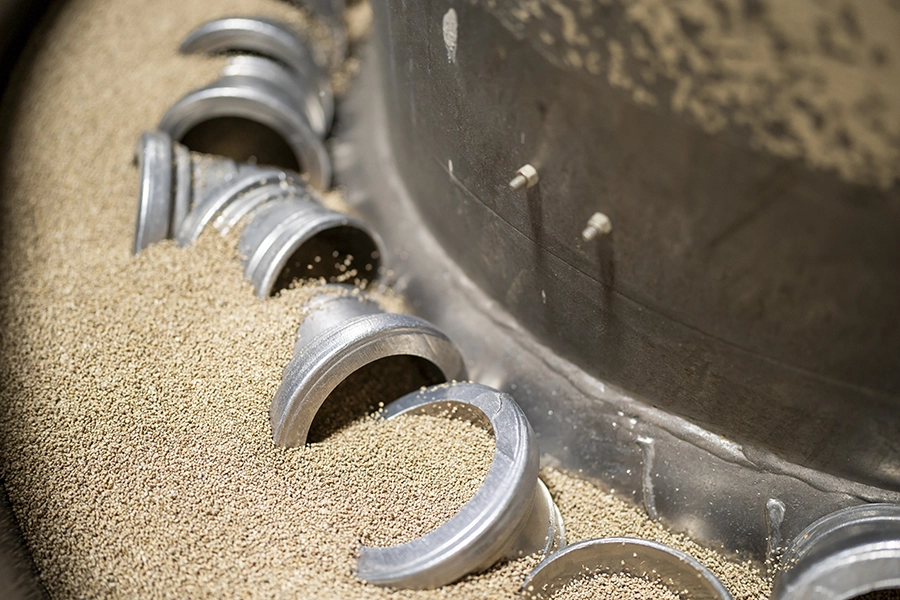
First Article
A first article is run to verify the process delivers the specified Almen intensity under production conditions. Results are documented and submitted for customer approval before series production begins.
STEP 05
Production: Customer-Approved Process Only
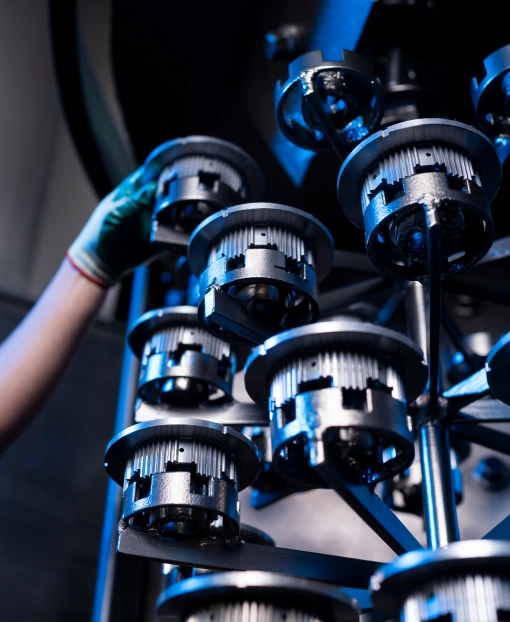
Series production runs only after first article approval. For AMS 2432 jobs, all process parameters (air pressure, media flow rate, wheel speed) are monitored and recorded in real time throughout every run.
STEP 06
Full Traceability & Documentation Package
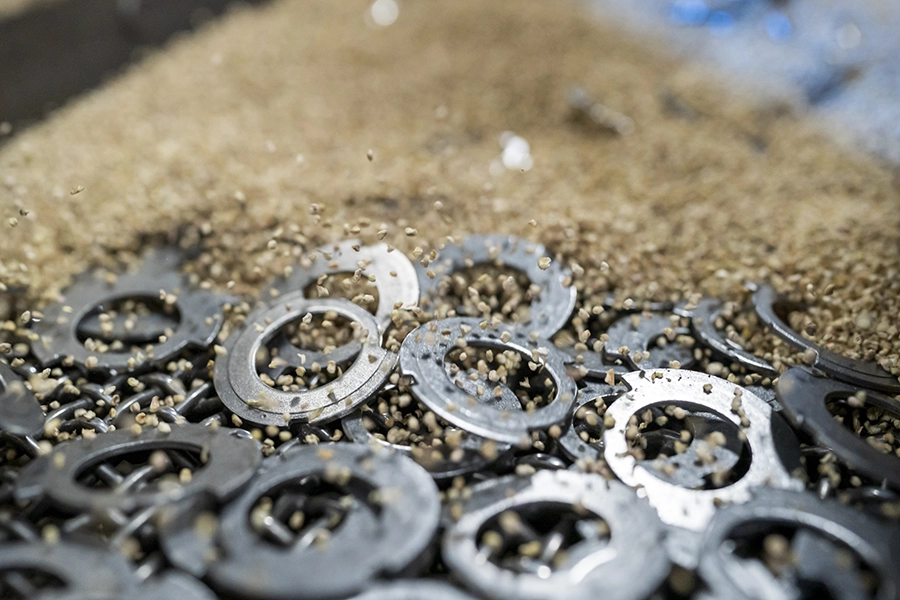
Every batch is traceable from receipt to shipment. The documentation package includes the approved process plan, Almen strip readings, machine parameter records, and batch identification for aerospace audit.
FULL RANGE CAPABILITY
Shot Peening Equipment & Capabilities
Vibra operates a full range of shot peening equipment configured for parts of every size, geometry, and complexity.
WITHIN NADCAP SCOPE
AMS 2430 · AMS 2432
Automated shot peening, and computer-monitored shot peening with real-time monitoring and recording of all process parameters.
EQUIPMENT
Wheel Blast Spinner Hanger Machines
High-volume production peening of medium to large components, with consistent 360-degree coverage.
EQUIPMENT
Air Blast Machines
Precision nozzle-directed peening for intricate contours, re-entrant radii, and transition zones.
EQUIPMENT
CNC Robotic Shot Peening
A multi-axis robotic arm follows programmed toolpaths across curved surfaces, compound contours, leading edges, and transition radii.
EQUIPMENT
Computer-Controlled Lance Peening
Extends coverage into bore inner diameters, blind pockets, and internal features inaccessible to external equipment.
MEDIA
Shot, Cut Wire, Ceramic, Glass
Edge-free, size-controlled cast steel shot, conditioned cut wire, ceramic, and glass beads.
COMMON MISCONCEPTION
Shot Peening vs. Blast Cleaning
Both processes use similar equipment, but the intent, control parameters, and engineering outcome are entirely different.
| SHOT PEENING | BLAST CLEANING | |
|---|---|---|
| Media Type | Edge-free, size-controlled: cast steel shot, conditioned cut wire, ceramic, glass | Angular grit with sharp edges: steel grit, alumina, slag |
| Purpose | Surface strengthening via compressive residual stress | Surface preparation / rust and scale removal |
| Depth of Effect | ~100 μm compressive residual stress layer | Superficial, top few microns only |
| Measurement | Almen intensity (SAE J443 procedure) | Visual cleanliness grade (Sa 2.5, ISO 8501-1) |
| Result | Increased fatigue life, improved yield strength | Clean surface profile for coating adhesion |
OUR FACILITY
Photo Gallery
Industries We Serve
FAQ
Frequently Asked Questions
Fatigue cracks initiate at the surface under tensile stress. Shot peening introduces a compressive residual stress layer that any applied tensile load must overcome before a crack can form, raising the fatigue threshold of the component.
AMS 2430 covers automated shot peening: media type, Almen intensity verification, coverage requirements, and documentation. AMS 2432 is computer-monitored shot peening where every process parameter is digitally logged and controlled in real time. AMS 2432 is mandated for flight-critical components. Vibra is NADCAP accredited and compliant with both.
Shot peening is applicable to aluminum alloys (2xxx, 6xxx, 7xxx series), titanium alloys, carbon and alloy steels, stainless steels, and high-temperature superalloys including Inconel and Waspaloy. Each material requires a specific media type, Almen intensity range, and coverage specification per the customer drawing and applicable AMS standard.
Yes. Vibra’s multi-axis robotic shot peening system follows programmed toolpaths across complex external geometries. Computer-controlled lance peening extends that capability to bore inner diameters, blind pockets, and internal features. Both systems operate under full CNC control with results compliant with AMS 2430 and AMS 2432.
Vibra Finish is located at 5329 Maingate Drive, Mississauga, approximately 25 to 30 minutes from downtown Toronto via Highways 401 and 427.